The U.S. has amassed a large military force in the Middle East
U.S. warns Iran’s reluctance to discuss weapons is a ‘big, big problem’ as fresh talks begin

-1120252475029447.jpg)
A third round of talks between the U.S. and Iran kicked off in Geneva on Thursday, with Iran under immense pressure to agree a nuclear deal with the States and to curb its nuclear and ballistic missile development programs.
The U.S. has amassed a large military force in the Middle East ahead of the discussions and President Donald Trump warned last week that “bad things” would happen if Iran does not agree to a new nuclear deal.
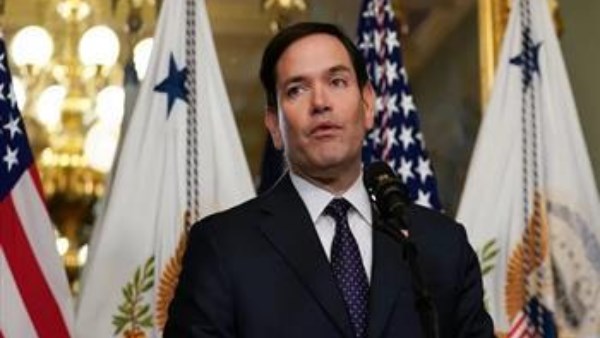
On the eve of the latest talks in Switzerland, U.S. Secretary of State Marco Rubio warned Iran’s reluctance to discuss its development of intercontinental ballistic missiles was also a significant stumbling block.
“The negotiations [on Thursday] will be largely focused on the nuclear program, and we hope progress can be made ... But it’s also important to remember that Iran refuses – refuses – to talk about ballistic missiles to us or to anyone, and that’s a big problem,” he told reporters Wednesday.
Rubio said that beyond the nuclear program, Iran’s conventional weapons were “solely designed to attack America and attack Americans, if they so choose to do so. These things have to be addressed.”
Trump alleged in his State of the Union address on Tuesday that Tehran was working on rockets that could “soon” reach the U.S. but did not present evidence for his assertion.
When asked how close Iran was to achieving such weaponry that posed a direct threat to U.S. territory, Rubio said, “clearly they are headed in the pathway to one day being able to develop weapons that could reach the continental U.S. ... And the ranges continue to grow every single year exponentially,” he said, calling it an “unsustainable threat.”
The latest round of talks on Thursday is being led by U.S. Envoy Steve Witkoff and Trump’s son-in-law Jared Kushner, while Iranian Foreign Minister Abbas Araghchi heads up Tehran’s delegation. Oman is mediating the discussions and the residence of the Omani ambassador to the United Nations is reportedly the venue for the talks.
Pressure is certainly mounting on Iran to agree to a deal in which it bows to the U.S.′ demand that it stops efforts to enrich uranium for nuclear weapons. But Iran has previously insisted its missile program was never been part of the agenda of talks with the U.S., and that this was “non-negotiable.”